
Concrete Epoxy Floors Tips and Tricks For Longevity
Concrete epoxy floors can stay glossy, durable, and easy to clean for years when they are treated like a finished surface, not bare concrete. The best results come from a simple rhythm: clean regularly, prevent avoidable damage, use the right products, and address small issues before they spread. Whether your floor is in a garage, showroom, workshop, warehouse, or basement, these practical habits help protect both appearance and performance.

How do you maintain concrete epoxy floors without damaging them?
Maintain concrete epoxy floors by removing grit often, mopping with a pH-neutral cleaner, wiping spills quickly, and avoiding abrasive tools or harsh chemicals. Epoxy flooring is tough, but its shine and protective topcoat can be dulled by sand, acidic cleaners, citrus products, vinegar, stiff brushes, or aggressive degreasers. Think of maintenance as protecting the coating layer that makes the floor attractive, stain resistant, and easier to sanitize.
A practical routine does not need to be complicated. In most residential spaces, light sweeping and weekly mopping are enough. In commercial or industrial settings, cleaning may need to happen daily because foot traffic, tires, carts, dust, and chemical exposure build up faster.
Use this simple care schedule as a starting point:
● Daily or as needed: Sweep, dust mop, or vacuum with a soft attachment to remove grit before it scratches the surface.
● Weekly: Damp mop with warm water and a pH-neutral, non-abrasive cleaner.
● After spills: Blot or wipe immediately, especially oil, solvents, salt residue, chemicals, or colored liquids.
● Monthly: Inspect high-traffic lanes, corners, doorways, and areas under equipment for dullness, stains, or impact marks.
● Periodically: Deep clean with the proper floor machine pad or request professional cleaning if the surface has heavy buildup.
Avoid flooding the floor unnecessarily. Epoxy is water resistant, but standing water around cracks, edges, drains, or failed seams can create problems over time. A damp mop followed by a clean rinse pass is usually better than soaking the surface.
The right cleaning products make a real difference
One of the easiest ways to extend the life of epoxy flooring is to stop using products that are too harsh for the finish. Many people reach for vinegar, citrus cleaners, bleach-heavy solutions, or abrasive powders because they work on other surfaces. On epoxy, those products can reduce gloss, leave residue, or weaken the coating with repeated use.
Choose cleaners that are:
● pH-neutral for routine mopping
● Non-abrasive so they do not haze the finish
● Residue-free to reduce slippery film
● Compatible with concrete coatings if used in a commercial or industrial space
● Appropriate for the contaminant, such as a mild degreaser for oil rather than a general household cleaner
Your tools matter too. Soft microfiber mops, foam squeegees, soft-bristle brooms, and non-scratch pads are safer than steel wool, stiff deck brushes, or rough scrubbing discs. If a stain does not lift with gentle cleaning, increase dwell time with the right cleaner before increasing scrubbing force.
Prevention is easier than repair
Most long-term epoxy damage starts with small, repeated stress: grit at an entry, dragging heavy storage bins, hot tires, chemical drips, or metal furniture legs scraping the same spot. Preventative habits reduce those daily attacks and help the floor age evenly.
Place mats at entrances, garage doors, loading areas, and workstations where dirt or moisture gets tracked in. Choose mats with backing that will not stain or react with the floor, and clean underneath them so trapped grit does not act like sandpaper. In garages, a mat can also help catch road salt and winter grime before it sits on the coating.
Protect the surface from weight and movement. Use felt pads or rubber protectors under furniture, tool chests, shelving, and equipment. Lift heavy items instead of dragging them. If carts or machinery roll across the floor, keep wheels clean and inspect them for embedded gravel, metal shavings, or sharp debris.
Good prevention also includes spill discipline. Epoxy resists many stains better than untreated concrete or some polished concrete surfaces, but resistance is not the same as immunity. Oil, brake fluid, harsh chemicals, paint, and dyes should be cleaned promptly to reduce staining, softening, or discoloration.
Which epoxy coating lasts longest in your space?
The longest-lasting epoxy coating depends on the environment, traffic level, moisture conditions, chemical exposure, and whether the floor needs extra slip resistance, UV stability, or impact strength. There is no single best choice for every building, which is why the right concrete coatings should match how the space is actually used. A garage, restaurant kitchen, showroom, and manufacturing floor all put different pressure on the system.
For residential garages and basements, a properly prepared epoxy system with a protective topcoat can offer a strong balance of durability and appearance. If the space receives sunlight, ask about UV-resistant options or topcoats that are less likely to amber or fade. Decorative flakes can help disguise dust and minor wear while adding texture.
Commercial spaces often need coatings designed for foot traffic, cleaning chemicals, slip resistance, and brand presentation. Industrial areas may require heavier systems such as mortar epoxy, self-leveling epoxy, anti-static coatings, vapor barrier systems, or chemical-resistant topcoats. The more demanding the environment, the more important surface preparation and product selection become.
Polished concrete is sometimes compared with epoxy because both can create a clean, modern floor. Polished concrete highlights the slab itself and can be very attractive, but it does not provide the same sealed, resinous protective layer as epoxy. If your priority is chemical resistance, color customization, or hiding slab imperfections, epoxy may be the better fit. If your priority is a natural concrete look with mechanical polishing, polished concrete may be worth considering.
Seasonal conditions can change your maintenance routine
Temperature, humidity, rain, snow, and daily use patterns can all affect how an epoxy floor wears. In colder regions, winter often brings road salt, slush, and gritty debris into garages and entryways. Salt residue can leave a cloudy film and may contribute to surface wear if it is left in place, so more frequent rinsing and mopping are smart during those months.
In humid areas, watch for moisture near edges, drains, or walls. If you notice bubbling, whitening, or peeling, the issue may involve moisture vapor, poor adhesion, or coating failure rather than simple dirt. Cleaning harder will not fix that kind of problem and may make the damaged area worse.
During hot weather, garages and workshops may see more tire marks, chemical spills, or expansion-related stress. Keep ventilation in mind when cleaning, and never use strong solvents without confirming they are safe for the coating. A seasonal inspection helps you catch changes before they become expensive repairs.
A quick seasonal checklist includes:
1. Clean under mats and around thresholds.
2. Look for peeling, bubbles, or cloudy patches.
3. Remove salt, oil, and tire residue promptly.
4. Check furniture pads, equipment feet, and cart wheels.
5. Refresh high-traffic cleaning routines when use increases.
Common problems and smart fixes
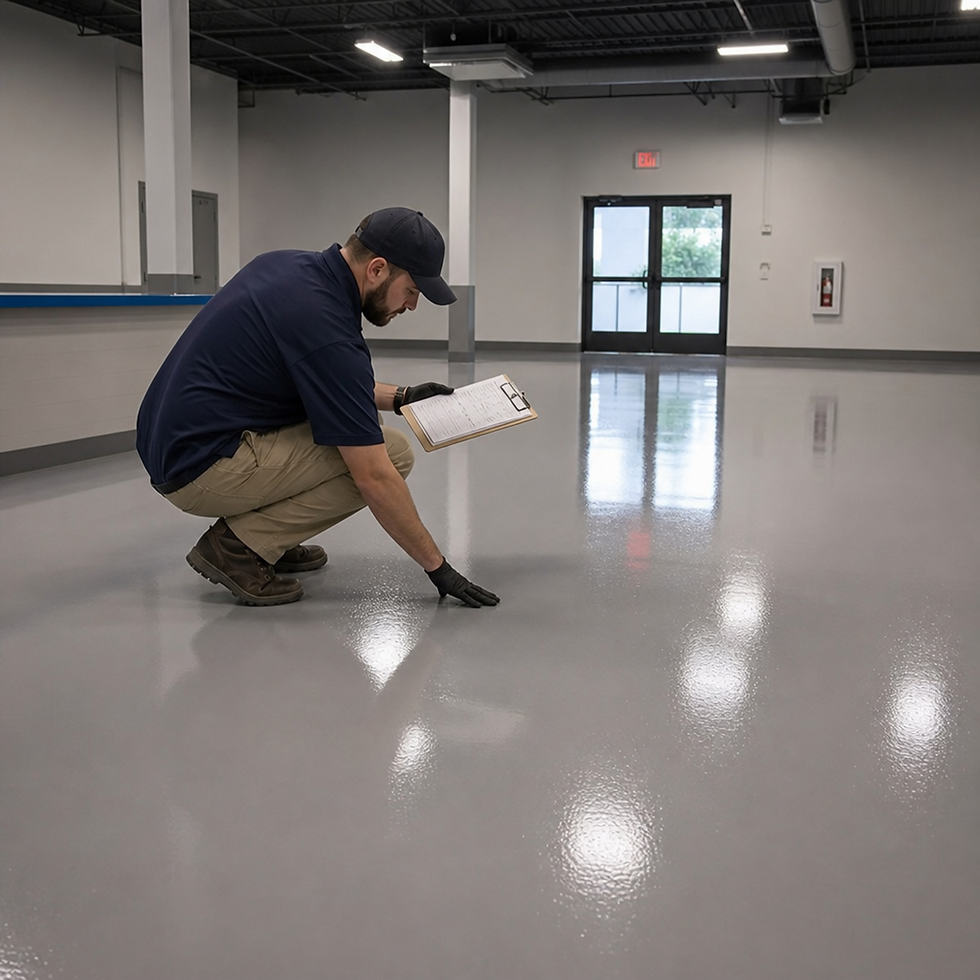
Small scratches, stains, and dull spots are often manageable if the coating is still bonded well. Start with the least aggressive solution: clean the area, rinse thoroughly, and let it dry. If a light scratch remains, a compatible polish, maintenance product, or epoxy touch-up may improve the appearance, depending on the floor system.
For minor surface scratches, some floors can be lightly sanded and touched up with the correct epoxy or topcoat. The key is compatibility. Using the wrong product can create a visible patch, poor adhesion, or a different sheen from the surrounding floor.
Stains should be handled based on the source. Oil needs a suitable degreaser. Rust may need a cleaner made for mineral staining. Paint, adhesives, and tire marks should be treated carefully so you do not dissolve or dull the finish while trying to remove the mark.
Call a professional when you see:
● Bubbling, blistering, or peeling
● Large cracks moving through the coating
● Widespread discoloration
● Moisture-related whitening or soft spots
● Deep gouges exposing bare concrete
● Repeated coating failure in the same area
Those symptoms often point to deeper issues such as moisture vapor, slab movement, contamination, or poor original preparation. Professional assessment can help determine whether the floor needs patching, recoating, grinding, or a different coating system.
Long-lasting floors come from consistent care
Concrete epoxy floors reward consistency. Sweep away grit before it scratches, mop with gentle products, protect the surface from dragging and impact, and respond quickly when stains or damage appear. The goal is not to treat the floor delicately; it is to maintain it intelligently so the coating can do its job.
With the right cleaning routine and a few preventative habits, epoxy flooring can remain a polished, practical surface for busy homes, garages, commercial spaces, and industrial environments. If your floor’s needs go beyond routine care, getting expert help early can protect your investment and prevent a small repair from turning into a full replacement.


Comments